
Beyond the Salute: The Cost of a Republic
bySantosh Nagasamy
Beyond the Salute: The Cost of a Republic
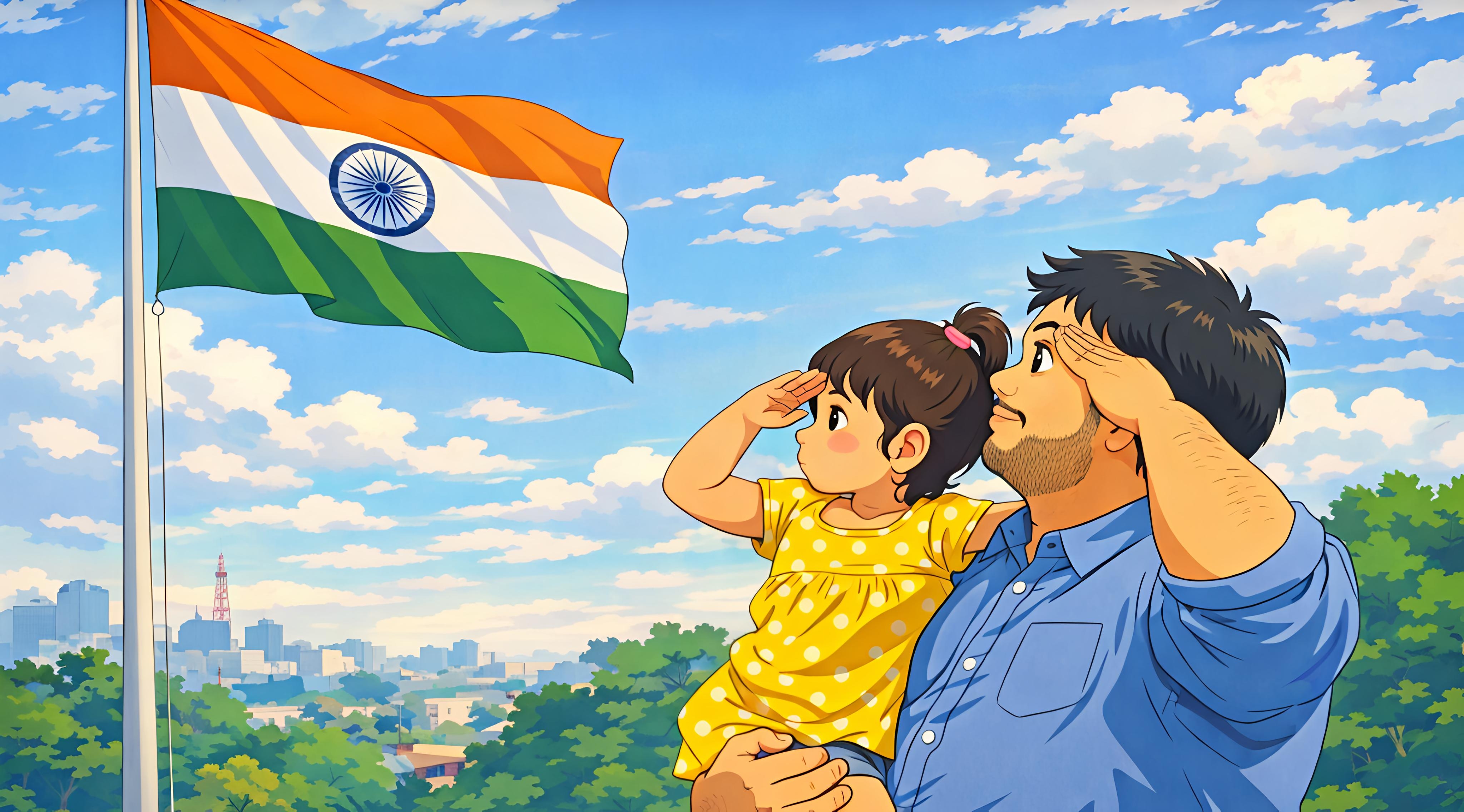
This morning, on a quiet public holiday, I was stepping out of our usual café with my wife and daughter when something simple caught her attention.
She pointed at the Indian flag fluttering nearby and asked, “Appa, what is that?”
I bent down and told her, “That’s our national flag. It’s the symbol of our independence.” Instinctively, I picked her up, and standing right there on the footpath, we both saluted the flag together.
It was a small moment. But it stayed with me because of the realisation that followed. I had told her it was a symbol of freedom, but it never crossed my mind to speak about responsibility.
As I lowered her back to the ground, my eyes fell on the footpath where we stood. Right there, beneath the fluttering flag, was the discarded plastic and waste of the morning. I realised then that I had only told her half the story.
Of course, she is only two and a half. That conversation will come later. But the moment sparked a deeper reflection on what Republic Day truly represents.
Independence Day marked the end of colonial rule. However, Republic Day gave us our Constitution. It gave us the framework through which freedom is lived, protected, and expressed. Freedom without structure is chaos. Republic Day gave freedom meaning.
But every right comes with a hidden cost. That cost is responsibility.
To understand why we struggle with this today, we must look honestly at our history. India’s story is not just 200 years of colonialism. It is centuries of systemic exploitation and deep scarcity. For generations, we lived in survival mode. When resources are limited and life is uncertain, the instinct is simple. You protect what is inside your walls, and you survive today.
That mindset leaves echoes in how we treat our surroundings. We see it when we sweep our own floors, but throw the garbage just outside our gate. We feel our job is done because we have pushed the problem past our own threshold. We tell ourselves the waste is "away."
But there is no "away." There is only "elsewhere" until it finds its way back into our land, our water, and eventually, our blood. Nature is finally showing us the bill for our neglect, not out of cruelty, but out of honesty. It is a reminder that we are not a collection of isolated individuals. We are a single, interconnected system.
When we think only of ourselves, we limit our own future. I see this same dynamic at Phitons every day. No company succeeds in a silo or through a single leader. Success only happens when we stop seeing our work as an isolated task and start seeing our responsibility to the whole.
We cannot outsource this to governments or leaders alone. Policies and infrastructure matter, but the system only heals when the individuals within it choose to change. Clean streets do not come from laws. They come from millions of small, conscious, daily choices.
We are no longer a nation in survival mode. We are a nation of opportunity, knowledge, and resources. With that comes a new chapter of ownership.
The flag my daughter and I saluted this morning does not just represent freedom from oppression. It represents the chance to build a better society where citizens do not wait for change, but instead become it.
One day, when my daughter asks again about that flag, I will not just tell her about our freedom. I will tell her how we honour it every day by taking care of the country it represents.
#RepublicDay2026 #Citizenship #Leadership #Sustainability #India #Responsibility #Ownership #Phitons #CivicSense